Upcoming Events
2026 Lectures (October–April)
- Sunday, October 25, 2026, at 2:00 pm
Film showing and discussion: A Fire to Last Until Morning: Why Make Art in the Climate Crisis? (Braedon Lowey) - Sunday, November 1, 2026, at 2:00 pm
Changing Migration Patterns: Long-Term Trends in International Migration in Iceland from the Late Nineteenth Century to the Present (Ólöf Garðarsdóttir) - Sunday, January 10, 2027, at 2:00 pm
Book Group Session on Ragnar Jónasson and Katrín Jakobsdóttir’s Reykjavík: A Crime Story (Annalee Lepp) - Sunday, January 24, 2027, at 2:00 pm
Gyrðir Elíasson and the Impasses of Modern Life (Brynnjarr Mendoza) - Sunday, February 21, 2027, at 2:00 pm
Icelandic Sherlocks: A Century of Icelandic Crime Fiction (Katrín Jakobsdóttir) - Sunday, April 4, 2027, at 2:00 pm
Nature and the Living Room (Anna Jóhannsdóttir) - Sunday, April 11, 2027, at 2:00 pm
In the Company of Islands (Ástráður Eysteinsson)
Sunday, October 25, 2026, at 2:00 pm
Film showing and discussion: A Fire to Last Until Morning: Why Make Art in the Climate Crisis?
University of Victoria, Clearihue A207
Braedon Lowey, 2025 recipient of the Richard and Margaret Beck Student Research Travel Award
A Fire to Last Until Morning is a 37-minute documentary seeking to justify the work or artists and humanists in an age of climate-related nihilism, grief, and anxiety. Interviews and case studies of poets, playwrights, journalists, authors, scholars, and musicians working in the intersection of art and climate change in British Columbia and Iceland demonstrate how artistic and scholarly work can guide us through the climate challenge.
Braedon Lowey is a UVic alum from the Master of Arts English program where he specialized in environmental literature. He now works as a wildland firefighter in Peace River, Alberta, and works on writing environmental literature of his own during the winters.
Sunday, November 1, 2026, at 2:00 pm
Changing Migration Patterns: Long-Term Trends in International Migration in Iceland from the Late Nineteenth Century to the Present
Location: University of Victoria, Clearihue A207
Ólöf Garðarsdóttir, Professor of Social History in the School of Humanities at the University of Iceland
In her presentation Ólöf Garðarsdóttir discusses Iceland’s transformation from a country of emigration to one of Europe’s most immigration-intensive societies, with the share of residents of immigrant background rising from less than 2% in the early 1990s to over 20% today. She places this recent development within a longer history of international mobility among Icelanders, highlighting high rates of emigration to the Americas in the 19th century, strong ties to Denmark and the other Nordic countries, and a distinctive pattern of return migration among Icelanders.
Since the turn of the twenty-first century, Iceland has transformed from a country with only marginal immigration to one with one of the highest immigration rates in Europe. In the early 1990s, fewer than 2 per cent of the population had an immigrant background, compared with more than 20 per cent today.
Although immigration to Iceland remained limited until recently, the Icelandic-born population has long been characterized by high levels of mobility. Iceland was part of the Danish Kingdom until 1918, and throughout the eighteenth and nineteenth centuries it was common for members of the intellectual elite to spend several years in Denmark. During the era of mass European migration to the Americas, Iceland also experienced exceptionally high levels of emigration. Relative to population size, emigration rates from Iceland were higher than those of any other European country except Ireland.
These connections with Denmark, and later with the other Nordic countries, have remained strong to the present day. Compared with their Nordic neighbours, Icelanders have, at least since the 1960s, been several times more likely to emigrate. A distinctive feature of Icelandic migration has been the high rate of return migration. Thus more than 70 per cent of Icelandic emigrants return within seven years.
Countries with small populations often face challenges in providing diverse educational, occupational, and cultural opportunities, particularly for young people. They may also struggle to sustain dynamic economies, essential services, and vibrant social and cultural life. I argue that the high level of international mobility in Iceland has, over time, created new opportunities not only for migrants themselves, but also for their families, social networks, and Icelandic society more broadly.
Ólöf Garðarsdóttir is Professor in social history at the University of Iceland. Her research interests include family history, history of education and historical demography. Currently, Ólöf leads the Nordic research infrastructure project NordHistPop, which brings together researchers, archivists, and programmers from the Nordic countries, Canada, and the United States. The projectʼs primary objective is to promote the exchange of knowledge and expertise in the creation of historical population databases, automated data transcription, classification systems, data dissemination, and, above all, record linkage. Particular emphasis is placed on developing methods and tools for linking information on individuals both within and across national borders, thereby enabling new insights into demographic trends, family and household formation, migration, and social mobility over time. One important strand of the project focuses on Nordic immigrant communities in North America in the late 19th and early 20th centuries, with the aim of reconstructing the life courses of Nordic migrants in Canada and the United States.
Sunday, January 10, 2027, at 2:00 pm
Book Group Session on Ragnar Jónasson and Katrín Jakobsdóttir’s Reykjavík: A Crime Story
Location: University of Victoria, Clearihue A329
Facilitated by Annalee Lepp, Dean of the Faculty of Humanities at the University of Victoria
As a special event to prepare us for the upcoming visit of Katrín Jakobsdóttir, we are hosting a book club session on the book Reykjavík: A Crime Story. The Richard and Margaret Beck Lecture Series will offer a free copy of the book to the first 20 people who sign up. To sign up for the book group session, please contact Helga Thorson (helgat@uvic.ca). If you are not one of the first 20 people to sign up, you can still join us for the book group event, but you will need to secure your own copy of the book. (Please note that there are also copies of the book available through the Greater Victoria Public Library.) The first 20 people who sign up will need to pick up the book at one of the fall lectures; we are not able to mail it to you.
Annalee Lepp is the Dean of Humanities and Professor of Gender Studies at the University of Victoria. Dr. Lepp’s research focuses on human trafficking, transnational labour migration, and irregular border movements in the global and especially the Canadian context. She is a big fan and avid reader of crime fiction generally, including Icelandic crime fiction, and does not want to be viewed as an expert in the field.
Sunday, January 24, 2027, at 2:00 pm
Gyrðir Elíasson and the Impasses of Modern Life
Location: University of Victoria, Clearihue A207
Brynnjarr Mendoza, doctoral researcher in comparative literature at the University of Turku in Finland
Confronting the readers of Gyrðir Elíasson’s short story collection Milli trjánna (Between the Trees) are the woes that colour the quotidian aspects of modern life. But the work weaves together contemporary existence with an Icelandic twist: August Strindberg finds himself inside an IKEA store in Iceland, evidently perplexed about his present situation; a man ponders the meaning of some scribbles about trolls and Jesus, which disappear as soon as he returns to them after a walk through the forest; footsteps inside a countryside cabin or taps on a windowpane haunt unwary figures who eventually resign themselves to the frequency of these enigmatic experiences.
The search for meaning grows ever distant. Not even the stillness of the countryside nor the solitude of the many characters provide the peace to contemplate existence. Pulsing through this collection of short stories are waves of obscure anxieties and feelings that stem from epiphanies that lead nowhere. This talk will examine the philosophical underpinnings that inform the enduring impasses in life the many anonymous characters wrestle with in the collection. It will frame the presence of unacknowledged spectres as the very symptom that characterizes contemporary life in Elíasson’s oeuvre. It is through this symptom that this talk will seek to understand the silent force imparted onto existence by the trauma that is modernity.
Brynjarr Þór Mendoza is a doctoral researcher in comparative literature at the University of Turku in Finland. His dissertation deals with scenes of absence in contemporary literature, and it builds on the aesthetic philosophies of Jacques Rancière and Alain Badiou. He has taught Icelandic at the University of Manitoba, Swedish at the University of British Columbia, and Icelandic literature at the University of Iceland. He is also currently an editor of Scandinavian-Canadian Studies and an affiliate of UBC’s Centre for Climate Justice. His Beck Lecture is based on his working monograph on Gyrðir Elíasson’s works, which explores the impressionism of Virginia Woolf, the existentialism of Jean-Paul Sartre, and contemporary affect theory under the fabric of Elíasson’s aesthetics.
Sunday, February 21, 2027, at 2:00 pm
Icelandic Sherlocks: A Century of Icelandic Crime Fiction
Location: University of Victoria, Clearihue A207
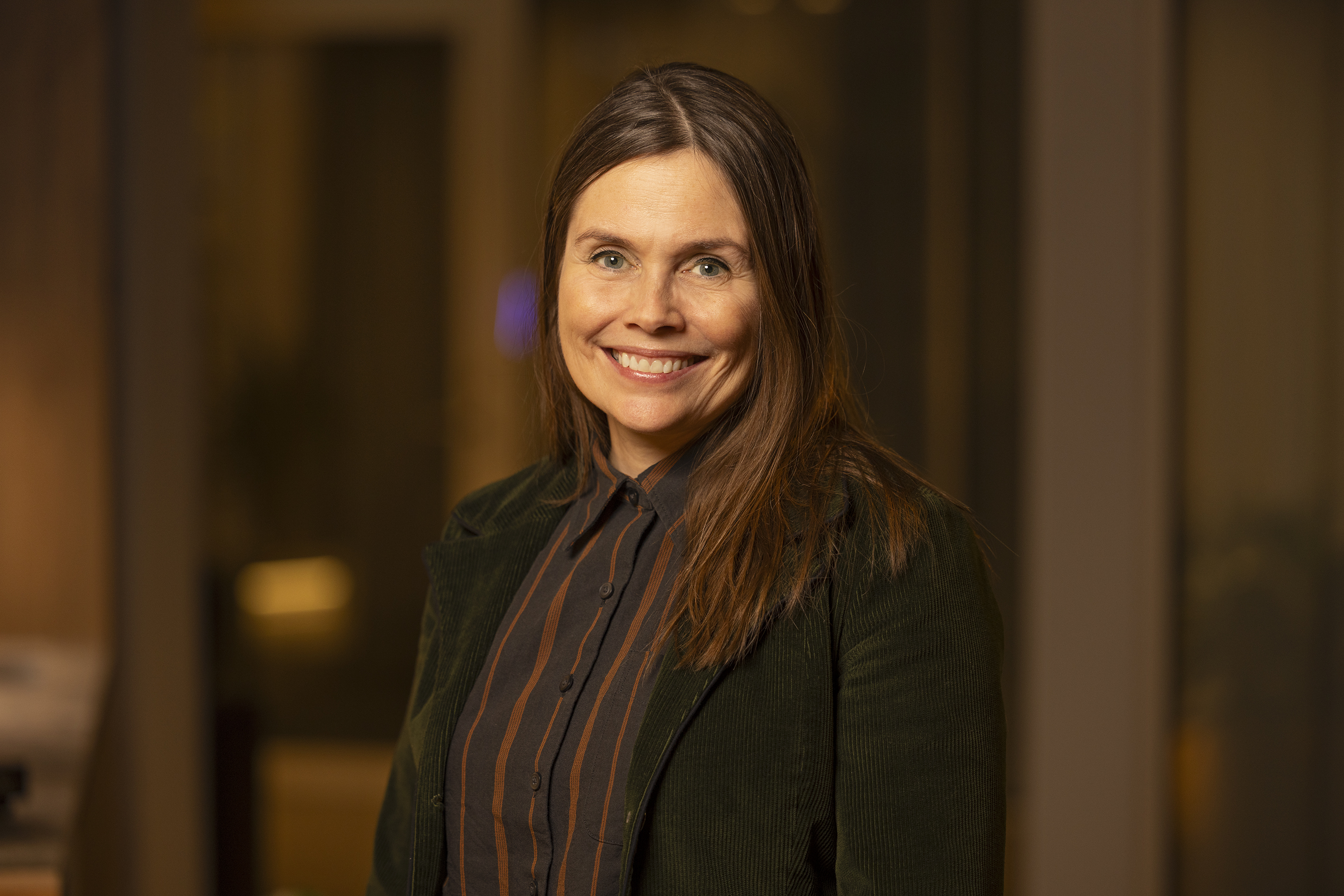
Katrín Jakobsdóttir, Prime Minister of Iceland from 2017–2024, literary critic, and crime fiction writer
Icelandic crime fiction has its roots in the early 20th century when Icelandic writers in Canada and Iceland started writing their own stories of master criminals and eccentric detectives. It took the genre almost a century to mature in Iceland, but its history may be seen as a remarkable testimony of the joy of creating a new literary genre in a culture better known for its medieval poetry and sagas. Katrín Jakobsdóttir began her studies on Icelandic crime fiction in the late 1990s when the genre had its breakthrough and went on to flourish in Iceland ever since. In her lecture she will talk about the history of Icelandic crime fiction and in particular discuss current popular writers like Arnaldur Indriðason, Yrsa Sigurðardóttir, Ragnar Jónasson, and Stefán Máni. She will also introduce her own books, which she has co-written with Ragnar Jónasson in recent years.
Katrín Jakobsdóttir served as the prime minister of Iceland (2017–2024) and led a three-party government. She was a member of the Icelandic parliament from 2007 to 2024. She served as Icelandʼs minister of education, science, and culture, and of Nordic cooperation from 2009 to 2013. She served as the chair of the Left-Green Movement from 2013 to 2024 and as a vice-chair of that party from 2003. She ran for president of Iceland in 2024 and came in second with 25,1% of the popular vote.
Prime Minister Jakobsdóttirʼs coalition government continued Iceland’s groundbreaking approach to addressing systemic gender inequality. Prime Minister Jakobsdóttir’s government was also at the forefront of climate change policy and committed to make Iceland carbon-neutral before 2040. Her government emphasized the importance the approach of Well-being government and spearheaded a framework of 39 indicators that cover social, economic and environmental dimensions of quality of life. During her time in office, she also led the work on Iceland´s first policy on artificial intelligence that was published in 2021 and her government established a plan to make the largest language models well-usable in the Icelandic language.
Before entering politics, she studied Icelandic literature, worked as literary critic, teacher and in a publishing house. She co-wrote a crime novel called Reykjavík with best-selling author Ragnar Jónasson that was published in 2022 and has been published in fifteen languages. They published a sequel called Franski spítalinn in 2025.
She now works as Senior emissary and chair of the Polar Dialogue at the Arctic Circle, serves as the Chair of the Pan-European Commission on Climate and Health, lectures on various topics and works as an independent consultant. She is also chair of the Reykjavík Arts Festival, chair of the Center of Equal Opportunites at the Business faculty at the University of Iceland and a member on the board of University of Iceland. She is a senior advisor to the Reykjavík Global Forum and a member of the global advisory board of the Forum.
She lives in Reykjavík, is married to Gunnar Sigvaldason and they have three sons.
*Please note that Katrín Jakobsdóttir will also be providing an additional lecture at UVic’s Centre for Global Studies on Monday, February 22, 2027. This talk, titled Well-being, Gender Equality and Climate Action: Pushing a Progressive Agenda in Times of Permacrisis,
will take place from 12:00–1:20 pm in Sedgewick C168.
Sunday, April 4, 2027, at 2:00 pm
Nature and the Living Room
Location: University of Victoria, Clearihue A207
Anna Jóhannsdóttir, visual artist, art historian, and a specialist at the National Gallery of Iceland
The genre of landscape painting emerged as a response to great changes in Icelandic society during the 20th century. With the shift towards modernization, nature found its way into a new urban space – the Iiving room – where landscape paintings became symbols of national pride, functioning as windows to the world of nature. Anna Jóhannsdóttir’s discussion will focus on the interpretation of nature in such paintings in Icelandic art history, with a side view to Canadian painters, especially the works of Emily Carr.
Anna Jóhannsdóttir holds an MA degree in fine arts from EnsAD in Paris and an MA in art history and theory from the University of Iceland. She currently works as a specialist at the National Gallery of Iceland. She has also worked independently as a visual artist, curator, art critic, and teacher of art history and theory. Her main field of research is Icelandic art history, with an emphasis on landscape and nature-related art, and modern art.
Sunday, April 11, 2027, at 2:00 pm
In the Company of Islands
Location: University of Victoria, Clearihue A207
Ástráður Eysteinsson, Professor of Comparative Literature at the University of Iceland and a literary translator
This talk is about explorations – real and imaginary – on and between islands in the North Atlantic and the North Pacific, from the ninth century to our time. Why and how do certain literary works connect with insular places and their identity, history, and mobility? The journey begins with the discovery of Iceland and goes from there to Ireland, Greenland, Japan, and the islands of British Columbia.
Ástráður Eysteinsson holds a PhD in Comparative Literature (including Translation Studies) from the University of Iowa. He has held a post at the University of Iceland for the past forty years but has also been a visiting professor at universities abroad, including the University of Victoria. He has translated several works of literature from German and English into Icelandic and has also co-translated Icelandic poetry into English.